Professional LVP Flooring Installation
Luxury Vinyl Plank (LVP) flooring installation is the process of preparing the existing floor and installing vinyl plank flooring to create a durable, attractive, and easy-to-maintain surface. LVP is one of the most practical flooring options for modern homes because it combines the appearance of hardwood with excellent durability and moisture resistance.
A successful LVP installation depends on more than the flooring product itself. The condition of the subfloor, proper measurements, layout, expansion requirements, installation method, and finishing details all affect how the floor looks and performs over time.
At Handyman Expert, we install LVP flooring in homes and other residential spaces throughout Atlanta and North Georgia. Our work can include removal of existing flooring, subfloor preparation and repairs, installation of click-lock or glue-down LVP, transitions, trim, and final cleanup.
Whether you are replacing carpet, laminate, tile, or an older floor, we evaluate the existing conditions first and determine what preparation is needed before the new flooring is installed.
Why Homeowners Choose LVP Flooring
LVP has become a popular alternative to hardwood, laminate, and tile because it offers a practical combination of appearance, durability, moisture resistance, and simple maintenance.
Moisture Resistance
Many modern LVP products are manufactured with waterproof or highly moisture-resistant cores. This makes them suitable for areas where occasional moisture is a concern, including kitchens, bathrooms, laundry rooms, entryways, and finished basements.
Water-resistant flooring does not eliminate the importance of proper installation. The subfloor must be suitable, and the flooring must be installed according to the manufacturer’s requirements.
Durability for Everyday Use
LVP flooring has a protective wear layer designed to help resist normal household wear, including scratches, scuffs, stains, and foot traffic. The appropriate product depends on how the room will be used, the amount of traffic, and whether pets or children are present.
No flooring is completely indestructible, but a properly selected and professionally installed LVP floor can provide reliable long-term performance under normal residential conditions.
Hardwood Appearance
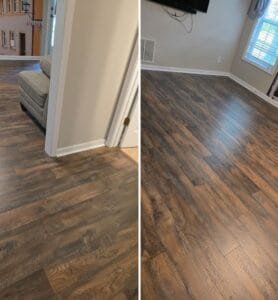
Modern LVP can closely reproduce the appearance of natural wood through realistic grain patterns, colors, textures, and plank designs. This allows homeowners to achieve a wood-look floor without the sanding, refinishing, and moisture concerns associated with traditional hardwood.
Easy Maintenance
LVP is relatively simple to maintain. Regular sweeping or vacuuming and occasional damp mopping with products recommended for the specific flooring are generally sufficient for everyday cleaning.
Unlike hardwood, LVP does not normally require sanding or refinishing as part of routine maintenance.
Comfort and Everyday Use
Compared with ceramic or porcelain tile, LVP generally provides a warmer and softer surface underfoot. Depending on the product, an approved underlayment may also improve comfort and sound performance.
The finished floor should still feel stable and solid. An uneven or poorly prepared subfloor can cause movement or noise even when high-quality flooring is used.
How to Choose the Right LVP Flooring for Your Home
LVP products are not all the same. Construction, core type, wear layer, thickness, underlayment, and installation method can affect the flooring’s performance and suitability for a particular room.
SPC vs. WPC LVP
Two common rigid-core constructions are SPC (Stone Plastic Composite) and WPC (Wood Plastic Composite).
SPC has a dense, rigid core that provides good dimensional stability and resistance to dents. It can be a practical option for high-traffic areas where rigidity and durability are important.
WPC uses a wood-polymer composite core and generally provides a softer feel underfoot. It may be preferred in bedrooms, living spaces, and other areas where comfort is a priority.
Neither construction is automatically right for every project. The appropriate choice depends on the room, expected traffic, subfloor conditions, and the characteristics of the specific product.
Click-Lock vs. Glue-Down LVP
Click-lock LVP uses an integrated locking system to connect individual planks. The finished floor typically floats over the prepared substrate and requires the expansion space specified by the manufacturer.
Click-lock installation is common in residential applications and can allow individual planks to be replaced if necessary.
Glue-down LVP is installed directly onto the prepared substrate using flooring adhesive. This method can provide a firmly attached floor but requires particularly careful subfloor preparation and correct adhesive application.
The installation method should be determined by the flooring product and the conditions of the project rather than by appearance alone.
Wear Layer and Flooring Construction
The wear layer is the transparent protective layer above the printed design. Its thickness and construction influence the floor’s resistance to everyday wear.
When selecting LVP, consider the amount of traffic, room usage, pets, expected service life, and the manufacturer’s warranty. Plank thickness, core construction, attached underlayment, and overall product quality are also relevant when comparing flooring options.
Our LVP Flooring Installation Process
A professional LVP installation begins before the first plank is installed. At Handyman Expert, we evaluate the existing floor and plan the work around the actual conditions of the project.
Consultation and Measurements
We begin by reviewing the rooms, measuring the installation area, examining the existing flooring, and discussing the flooring product and installation method.
Accurate measurements help determine material requirements, plan the plank layout, and identify areas that may require additional preparation.
Existing Flooring Evaluation and Removal
LVP may sometimes be installed over an existing floor when the substrate and existing material meet the flooring manufacturer’s requirements. In other situations, the existing flooring needs to be removed.
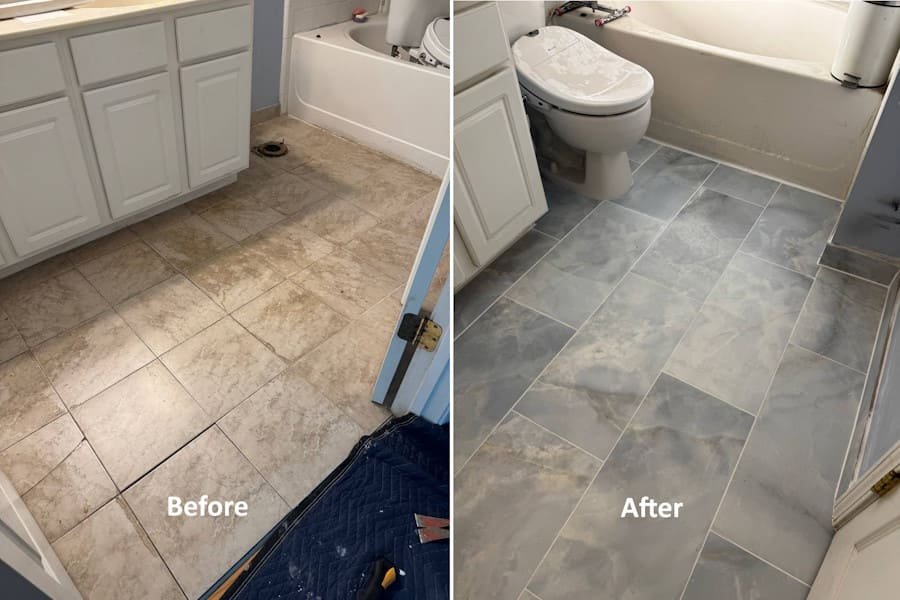
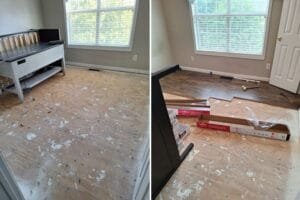
Carpet removal may involve removing padding, tack strips, staples, and adhesive residue. Laminate, tile, hardwood, and other flooring materials can require different removal and preparation methods.
After removal, the exposed surface is inspected before installation continues.
Subfloor Inspection
The subfloor is the foundation of the flooring system. We look for uneven areas, damaged sections, loose wood panels, cracks or imperfections in concrete, excessive movement, and other conditions that could affect the new floor.
Addressing these issues before installation can help prevent movement, noise, separated joints, and premature problems with the flooring.
Subfloor Preparation and Repairs
The goal is to create a clean, stable, and sufficiently flat surface that meets the requirements of the selected LVP product.
Preparation may include securing loose plywood or OSB, replacing damaged sections, removing protruding fasteners, repairing concrete imperfections, removing adhesive residue, correcting high spots, or filling localized low areas.
Complete floor leveling is not always necessary. The appropriate preparation depends on the actual condition of the surface and the manufacturer’s flatness requirements.
Moisture Evaluation
Moisture conditions are particularly important when installing LVP over concrete, in basements, or in areas with previous water exposure.
Although many LVP products are waterproof or highly moisture resistant, moisture beneath the flooring can still affect adhesives, underlayment, the subfloor, and surrounding building materials. Where applicable, moisture conditions should be evaluated according to the flooring manufacturer’s requirements.
Underlayment When Required
Some LVP products have attached underlayment, while others require a separate approved underlayment. The correct underlayment depends on the specific flooring product and installation conditions.
Adding an incompatible underlayment can interfere with a locking system or affect the flooring warranty, so we follow the manufacturer’s installation requirements rather than automatically adding another layer.
Layout and Plank Installation
Before installation begins, the plank layout is planned to create a balanced appearance and avoid unnecessarily narrow pieces along walls and other visible areas.
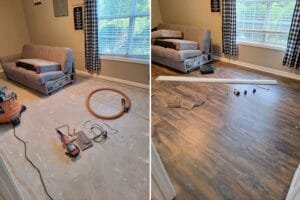
Each plank is installed according to the manufacturer’s specifications. For floating click-lock floors, required expansion space is maintained around walls, cabinets, and other permanent structures.
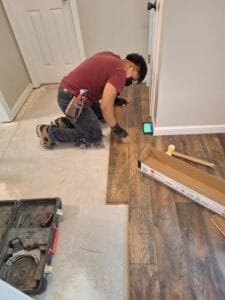
Click-lock installation requires accurate alignment, proper staggering, secure connections, and precise cuts around doorways, corners, cabinets, and other obstacles.
For glue-down LVP, the substrate must be properly prepared and the correct adhesive must be applied according to the flooring and adhesive manufacturer’s requirements.
Baseboards and Flooring Transitions
Finishing work completes the appearance of the installation. Depending on the project, this may include reinstalling or installing baseboards, adding quarter round or shoe molding, trimming doors, and installing transitions between different flooring materials.
Transitions need to provide a clean finished appearance while remaining compatible with the flooring system and its required movement.
Final Inspection and Cleanup
After installation, we inspect the finished floor for alignment, plank connections, cuts, transitions, trim, and overall appearance.
The work area is cleaned and installation debris is removed. We also review basic maintenance requirements with the homeowner so the new floor can be properly cared for after installation.
Subfloor Preparation for LVP
Subfloor preparation is one of the most important parts of an LVP flooring project. A floor does not need to be perfectly level to accept LVP, but it generally needs to be sufficiently flat and stable according to the flooring manufacturer’s requirements.
A floor with a gradual slope may be acceptable, while sudden high spots, deep low areas, or uneven transitions can create problems.
Installing click-lock LVP over an unsuitable surface can place stress on the locking system and may result in movement, clicking sounds, separated joints, or damaged planks.
Concrete Subfloors
Concrete surfaces should be clean, dry, stable, and properly prepared. Cracks, damaged areas, surface contamination, adhesive residue, and uneven areas may need to be addressed before installation.
Where appropriate, localized repairs or a suitable leveling compound may be used to improve the installation surface.
Wood Subfloors
Wood subfloors require inspection for loose panels, damaged areas, protruding nails or screws, and uneven sections. Damaged sections may need to be repaired or replaced before the LVP is installed.
A stable wood subfloor provides better support and helps reduce movement in the finished flooring system.
LVP Flooring Installation Cost
The cost of LVP flooring installation depends on the size and complexity of the project as well as the condition of the existing floor.
A professional estimate may include installation labor, removal of existing flooring, subfloor preparation, repairs or leveling, trim, transitions, and cleanup.
What Affects the Installation Cost?
Floor size and layout: Larger open areas can be more efficient to install, while small rooms, hallways, closets, stairs, and irregular layouts may require more cutting and labor.
Existing flooring: Carpet, laminate, tile, hardwood, and other materials require different removal procedures. Tile and some glued-down materials can require substantial surface preparation after removal.
Subfloor condition: Uneven areas, damaged wood, concrete repairs, adhesive residue, and leveling requirements can add preparation work.
LVP product and installation method: SPC, WPC, click-lock, and glue-down products have different installation requirements.
Finish work: Baseboards, shoe molding, transitions, door trimming, and other finishing details can affect the total project scope.
For this reason, the most accurate way to determine the cost of an LVP installation is to evaluate the actual space and existing floor rather than relying only on a per-square-foot price.
LVP vs. Other Flooring Options
Different flooring materials are designed for different priorities. LVP is often selected when homeowners want a wood-look floor with relatively easy maintenance and strong moisture resistance.
| Flooring | Moisture Resistance | Maintenance | Appearance | Installation |
|---|---|---|---|---|
| LVP | High | Easy | Wood-look options | Relatively efficient |
| Laminate | Product-dependent | Easy | Wood-look options | Relatively efficient |
| Hardwood | More moisture-sensitive | More maintenance | Natural wood | More involved |
| Ceramic/Porcelain Tile | Excellent | Moderate | Tile/stone | More labor-intensive |
LVP vs. Laminate
Both LVP and laminate can provide a realistic wood appearance and are available in floating click-lock systems. The primary difference is moisture performance. LVP is generally better suited to areas where moisture exposure is possible, while laminate products vary in their moisture resistance and installation requirements.
LVP vs. Hardwood
Hardwood provides natural wood and can be refinished, but it generally requires more maintenance and greater attention to moisture and humidity conditions. LVP offers a wood-look alternative with simpler routine maintenance and strong moisture resistance.
LVP vs. Tile
Ceramic and porcelain tile are highly durable and well suited to wet environments, but tile installation can involve more preparation and labor. LVP generally provides a warmer, softer surface and can be installed more efficiently in many residential applications.
Common LVP Installation Problems to Avoid
Many flooring problems are related to installation or subfloor conditions rather than the LVP product itself.
Uneven subfloor: High and low areas can cause movement and place stress on click-lock joints.
Insufficient expansion space: Floating floors need the expansion space specified by the manufacturer around walls and permanent objects.
Poor plank layout: Improper planning can create very narrow pieces, unbalanced starting points, or an unnatural-looking pattern.
Incorrect underlayment: An incompatible underlayment can affect the performance of the flooring or locking system.
Incorrect adhesive: Glue-down LVP requires an adhesive compatible with the flooring product and substrate.
Proper preparation and installation according to the manufacturer’s requirements help reduce these risks.
LVP Flooring Installation in Atlanta and North Georgia
Handyman Expert provides LVP flooring installation for homeowners throughout Atlanta and North Georgia, including Alpharetta, Roswell, Marietta, Cumming, Norcross, Sandy Springs, Johns Creek, Dunwoody, and surrounding communities.
We work with homeowners who are replacing outdated flooring, remodeling individual rooms, updating an entire level of a home, or preparing a property for sale or occupancy.
Whether the project involves a straightforward click-lock installation or requires flooring removal and subfloor preparation, we evaluate the conditions of the space before determining the installation scope.
Frequently Asked Questions About LVP Flooring Installation
Can LVP flooring be installed over existing flooring?
Sometimes. The existing material must be stable, clean, sufficiently flat, and compatible with the selected LVP installation method. Some existing flooring materials need to be removed before installation.
Can LVP be installed over concrete?
Yes. LVP can be installed over properly prepared concrete when the flooring product allows it. The concrete should meet the manufacturer’s requirements for flatness, cleanliness, dryness, and moisture conditions.
Can LVP be installed in a bathroom or kitchen?
Yes. LVP is commonly used in kitchens and bathrooms because many products offer strong moisture resistance or waterproof construction. Proper installation is still important, particularly around areas where water can reach the subfloor or surrounding structures.
Does LVP need underlayment?
Not always. Some LVP products have attached underlayment, while others require or allow a separate approved underlayment. The correct choice depends on the specific product and manufacturer’s instructions.
What is the difference between SPC and WPC flooring?
SPC uses a denser, more rigid composite core, while WPC generally provides a softer feel underfoot. The appropriate option depends on the room, traffic, comfort preferences, and product specifications.
How long does LVP installation take?
The installation time depends on the square footage, number of rooms, existing flooring, subfloor condition, installation method, and finishing requirements. A straightforward project may take less time than a project requiring demolition, repairs, leveling, and detailed trim work.
How much does LVP flooring installation cost?
The cost depends on the project size, existing flooring, subfloor condition, preparation requirements, LVP product, installation method, and finishing work. An on-site evaluation provides a more accurate estimate than a standard per-square-foot figure.
Can damaged LVP planks be replaced?
Many click-lock LVP systems allow individual planks to be replaced, although the replacement process depends on the flooring system and location of the damaged plank.
How long does LVP flooring last?
Service life depends on the quality of the product, wear layer, traffic, maintenance, environmental conditions, and installation quality. Properly selected and installed LVP can provide many years of residential use.
Does the floor need to be perfectly level before LVP installation?
No. A floor can have a gradual slope and still be suitable for LVP. What matters is whether the surface is sufficiently flat and stable according to the flooring manufacturer’s requirements.
Get an LVP Flooring Installation Estimate
Planning to replace your flooring with Luxury Vinyl Plank? Handyman Expert can evaluate the existing floor, identify preparation requirements, help determine the appropriate installation approach, and provide an estimate for the project.
We install LVP flooring with attention to subfloor preparation, accurate layout, proper installation, transitions, trim, and final finish.
✅ Free On-Site Consultation & Precise Measurements
✅ Expert Assistance with Material Selection
✅ Clear, Detailed Cost Breakdown with Zero Hidden Fees
Contact Handyman Expert today to schedule your consultation and receive a professional estimate for your Luxury Vinyl Plank flooring installation project 📞